 How-to
How to Prepare for Moving Out With Disabilities
Last Updated: November 26, 2026
Quick Summary
Moving out with disabilities means planning three to six months ahead, mapping your daily support needs, choosing an accessible home, and arranging care, equipment and services before moving day. Start with a written plan covering housing, care assessments, equipment and benefits, and confirm each transfer in writing.
- Three to six months is a realistic planning window for most moves.
- Track one week to see where you need help and where you run out of energy.
- Report a change of address for Universal Credit as soon as you know it.
- Start researching alternative care agencies at least six weeks ahead.
- Pack an essentials box with medication, chargers, toiletries and a change of clothes.
Table of Contents
- How do I prepare to move out with a disability?
- Start planning months, not weeks, ahead
- Work out what support you need day to day
- Building your moving house with a disability checklist
- Coordinating care, equipment and essential services
- Independent living skills for adults with disabilities
- How occupational therapy for independent living helps you prepare
- Decluttering, packing and planning an accessible moving day
- Getting in touch with Life-OT before you move
- Frequently Asked Questions
How do I prepare to move out with a disability?
The earlier you begin, the more choice you keep. Last-minute moves force compromises on housing, care and equipment.
Below, we break the process into clear steps, from a three-month timeline to an accessible moving day. This guide also covers UK benefits, tenancy and care-continuity points.
It helps to see moving out as a support-planning task as well as a housing task.
Start planning months, not weeks, ahead
Three to six months is a realistic planning window for most people. Some moves need longer, especially if you are waiting on a housing decision or an equipment assessment.
Why so long? Several things run on their own timetables:
- Housing applications and tenancy paperwork
- Care assessments and support-worker recruitment
- Equipment assessments, ordering and delivery
Leaving care and equipment arrangements until the keys are in hand can leave a gap in support after the move.
Start with a simple written plan. Who does what, by when. Keep it somewhere everyone can see it.
Work out what support you need day to day
Before you look at a single property, write down what a normal day actually requires. This is the foundation for everything else.
Break it into plain categories:
- Personal care: washing, dressing, toileting, medication
- Meals: cooking, shopping, preparing easy meals on low-energy days
- Mobility: moving around the home, getting out, using mobility equipment
Be honest about the gaps. It is common to overestimate what you can manage alone in a new place, and noticing this is useful information.
A useful exercise is to track one week. Note where you needed help, where you ran out of energy, and what you avoided.
Building your moving house with a disability checklist
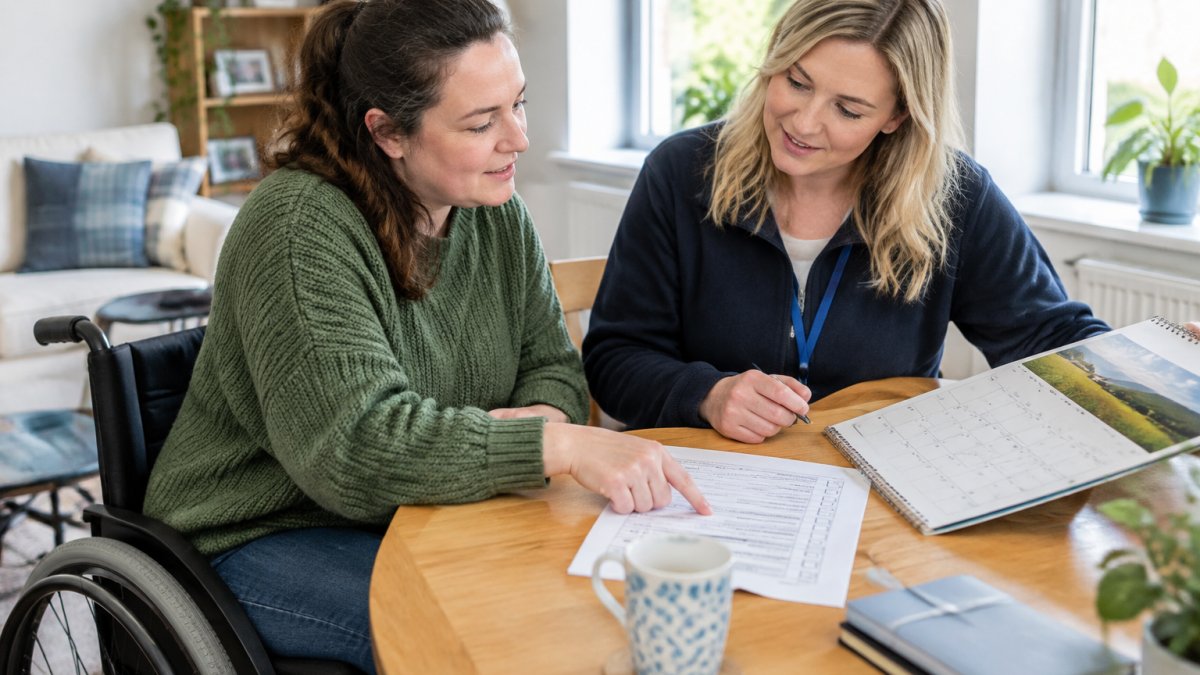
A moving house with a disability checklist works best when it is split into phases, not one long list. Group tasks by when they need to happen, then tick them off.
- Doorway widths that fit your mobility equipment
- A bathroom you can use, or space to adapt one
Ask about the tenancy too. Who is responsible for adaptations, and what permission is needed? Get it in writing. If you rent, check whether the landlord is a council, a housing association or a private landlord, because the process for requesting adaptations differs. For social housing, ask about the local authority's adaptations service and waiting times.
Housing costs, benefits and tenancy responsibilities
Before you commit, work out what the rent and bills will actually cost and how they will be paid.
Ask the landlord or letting agent what is included in the rent and what deposits or guarantors are required. If you need support with rent, ask your local authority what housing payment and council tax support it offers.
Rights, choice and safeguarding
Moving out with disabilities is a decision that should be led by you, with support if you want it. If you need help making decisions, ask about advocacy services or, where relevant, formal decision-making support. Make sure anyone helping you plan understands what you want and respects your choices.
Regional differences
Housing, adaptations and social care processes can differ across the nations and local authorities. Ask your local authority for its published information on housing options and adaptations, and check whether there are separate arrangements for your area.
For practical ideas on what actually works, see our guide to the best home adaptations for independence.
Coordinating care, equipment and essential services
Care, equipment and services must be arranged before you move, not after. A gap of even a week can leave you without support in a new area, and re-establishing a care package from scratch often takes longer than people expect. The key is to treat each service as a separate transfer with its own lead time, and to start the longest-lead items first.
Care and support
If you receive care from your local authority, contact the adult social care team where you live now and ask about a care needs assessment review before the move.
If you employ a personal assistant directly, check whether your funding can move with you and whether your PA can travel. If you use a care agency, ask whether it operates in the new area; if not, start researching alternatives at least six weeks ahead.
Equipment and adaptations
Mobility equipment, hoists, specialist seating and daily living aids all need a transfer plan. Contact the service that supplied your equipment and ask whether it stays with you, is returned, or is reissued in the new area.
Confirm delivery dates to the new address and check access on the day: will someone be there to receive equipment, and is there a clear route to where it needs to go?
Health and prescriptions
Register with a new GP as soon as you have a confirmed address, and ask for your prescriptions to be transferred. Ask your new practice how long repeat prescriptions take to set up, and request a supply to cover any gap. If you have hospital appointments or specialist care, ask for referrals to be updated and keep a list of your current clinicians, medications and dosages.
Utilities and admin
Set up energy, water and broadband before moving day, and update your address with the Department for Work and Pensions, your bank, and any other services. If you receive benefits, tell the relevant office as soon as your address changes; do not wait until after the move.
Your single contact list
Keep one list with names, numbers and who is responsible for what: the care team, equipment service, GP, pharmacy, utilities and removals. Share it with a trusted person.
An assistive technology assessment can identify the tools that will make daily life easier before you commit to a property. Sort this early, so equipment arrives with you.
Independent living skills for adults with disabilities
Independent living skills are the everyday abilities that let you manage your home and life with confidence.
The core set includes:
- Planning and cooking simple, easy meals
- Managing a budget and paying bills
- Keeping a routine for medication and appointments
- Cleaning and laundry at a manageable pace
Start practising before you move. Cook one meal a week. Manage one bill. Build the routine while support is still close by.
For step-by-step strategies, read our guide on how to improve daily living skills at home.
How occupational therapy for independent living helps you prepare
Occupational therapy for independent living can turn a general plan into a practical one.
This might include:
- A task-by-task review of what you can do and where you need support
- Recommendations for adaptations and equipment that fit your home
- Strategies to protect your energy and manage fatigue
- A support plan that families and support workers can follow
Personalised plans tend to be more useful than general advice when applied to a real home and routine.
Life-OT provides community-based occupational therapy and builds personalised intervention plans, combining occupational therapy with sports therapy and nutrition, with over 20 years of experience.
Decluttering, packing and planning an accessible moving day
Decluttering before you pack makes the move lighter, cheaper and calmer. Start with one room at a time, and decide: keep, donate, or bin.
Pack a separate essentials box for day one. Include medication, chargers, toiletries, a change of clothes, snacks and any equipment you need nightly.
Reducing fatigue and having a backup plan
Moving is physically demanding, and fatigue can derail the best plan. Pace yourself over several weeks rather than one weekend.
- Pack one room at a time, with rest breaks
- Label boxes clearly by room and by priority
- Ask removals to place essentials boxes last so they come out first
- Keep a chair and clear route ready in the new home
Our article on occupational therapy for fatigue explains how to protect your energy through demanding tasks like this.
If your moving-day support falls through, a backup helps. Name a second person and a second plan before the day arrives.
Getting in touch with Life-OT before you move
The best time to plan support is before you sign a tenancy, not after. An early conversation gives you time to arrange assessments, equipment and a support plan that fits your new home.
If you are weighing up support options, our independent living programmes cost guide explains what to expect.
Moving out with a disability is a big step, and it goes far better with the right support behind you.
Frequently Asked Questions
How can I make moving house less stressful if I have fatigue or limited mobility?
Spread the work over several weeks and do one small task at a time, such as clearing one cupboard or making one phone call. Book removals staff who are used to handling mobility equipment, and pack a separate bag with medication, chargers and a change of clothes. Keep the last few days before the move free of appointments, and ask someone to handle calls and door-answering on the day so you can rest between tasks.
What should I do on moving day if I need personal assistance?
Confirm your support worker's hours and travel arrangements at least a week in advance, and agree who helps with personal care, meals and medication. Give them the new address, key collection details and a contact number for the removals team. Have a backup person on standby in case of illness or delays, and keep an easy-read note of the day's plan in a visible place so everyone knows what happens next.
How can an occupational therapist help me prepare to live independently?
An occupational therapist can assess how you manage daily tasks such as washing, cooking and moving around your home, then recommend equipment, adaptations and routines that fit your needs. They can also help you practise independent living skills for adults with disabilities before the move and work with your family or support workers so everyone follows the same plan. Life-OT provides community-based assessments and personalised intervention plans.
What equipment or adaptations might I need in a new home?
It depends on your needs, but common options include grab rails, a level-access shower, ramps, wider doorways and kitchen equipment such as perching stools or adapted utensils. An accessible housing checklist should note doorway widths, stairs, bathroom layout and parking before you commit to a property. Ask an occupational therapist to assess the property with you so any changes are planned and costed before you move in.