 ultimate-guide
Integrating Nutrition with Occupational Therapy Plans
Table of Contents
- Why Nutrition Belongs in Occupational Therapy Plans
- Nutritional Screening for Occupational Therapy: A Practical Framework
- Managing Feeding and Swallowing Difficulties in Daily Routines
- Multidisciplinary Rehabilitation Strategies That Include Nutrition
- Occupational Therapy and Sports Therapy Integration: Movement, Meals, and Recovery
- Common Mistakes When Integrating Nutrition into OT Plans
- Conclusion
- Frequently Asked Questions
Last Updated: September 20, 2026
Why Nutrition Belongs in Occupational Therapy Plans
Integrating nutrition with occupational therapy plans means treating food and mealtimes as daily occupations in their own right, not as a separate concern handed off to a dietitian. A client who cannot grip a fork safely, or who becomes overwhelmed by a crowded supermarket, is not going to benefit from a perfectly designed meal plan they cannot physically or cognitively follow.
The relationship between nutrition and occupational therapy runs in both directions. Poor intake undermines the strength, attention and mood a person needs to engage in therapy. Equally, the functional barriers an OT identifies, such as reduced hand function or sensory aversion to certain textures, directly shape what a person can eat.
That is why nutrition belongs inside the OT plan rather than beside it. Keep reading to see how screening, mealtime routines and multidisciplinary working fit together.
Nutritional Screening for Occupational Therapy: A Practical Framework
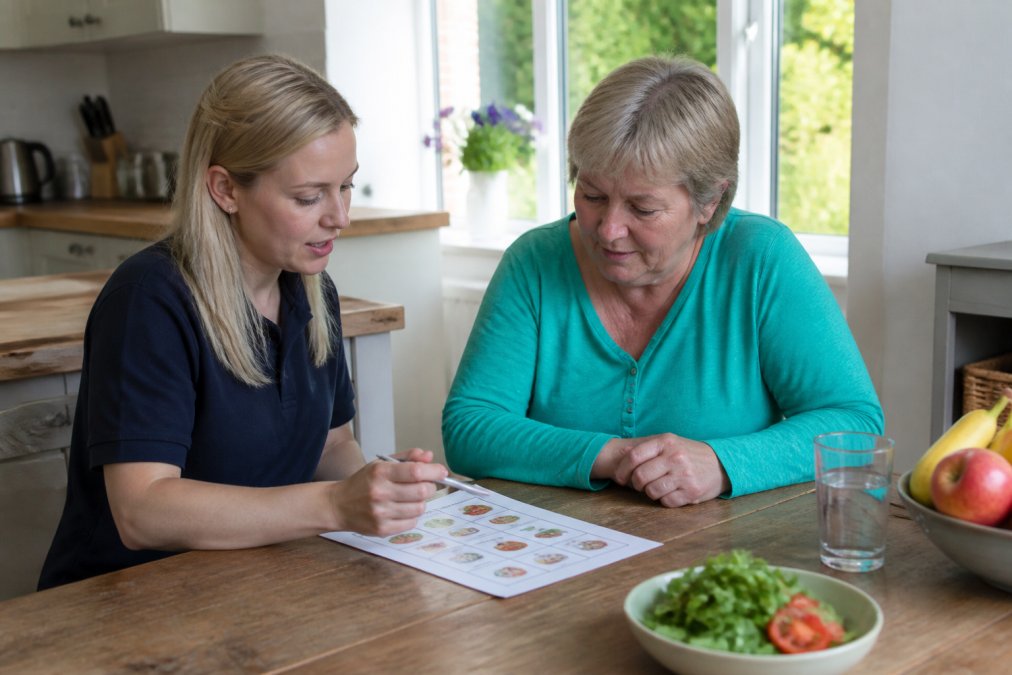
Nutritional screening for occupational therapy is the process of identifying clients whose eating, drinking or food access may be affecting their ability to participate in daily activities. It is a red-flag exercise, not a full dietary assessment.
What to Screen For and When
Screen at initial assessment and again whenever function changes, such as after a hospital discharge or a decline in mobility. Look for:
- Unexplained weight change or loose-fitting clothing
- Difficulty holding cutlery, opening containers or swallowing
- Mealtime fatigue, distraction or distress
- Limited food access, whether from cost, transport or kitchen confidence
Working Within Your Scope of Practice
Occupational therapists assess function and routine; they do not prescribe therapeutic diets. Where screening raises a concern, refer on to a dietitian or the client's GP. Document what you observed, not a diagnosis.
Managing Feeding and Swallowing Difficulties in Daily Routines
Managing feeding and swallowing difficulties in daily routines starts with the environment and the sequence of the meal, not the food itself. An OT looks at posture, seating, timing and the tools a person uses.
Practical adjustments we build into plans include:
- Seating that supports a stable, upright posture before any food is offered
- Adapted cutlery, non-slip mats and open cups where grip is limited
- Shorter, more frequent mealtimes to reduce fatigue
- Reducing background noise and clutter for clients who are easily distracted
Where swallowing safety is in question, this sits with speech and language therapy and medical colleagues. The OT contribution is making the recommended strategies work in a real kitchen, at a real table, at a realistic time of day.
Multidisciplinary Rehabilitation Strategies That Include Nutrition
Multidisciplinary rehabilitation strategies that include nutrition work best when every professional is contributing to one shared set of goals rather than running parallel plans. The client should not have to reconcile three different sets of advice.
A simple coordination routine makes this manageable:
- Agree one primary functional goal, such as preparing a hot drink independently
- Assign each discipline a clear contribution, whether strength, swallowing safety or meal preparation
- Share written notes after each session so the plan stays current
- Review together when the client's function changes
This approach matters most at transition points, such as moving from children's services into adult care, where continuity is often the first thing to break down.
Occupational Therapy and Sports Therapy Integration: Movement, Meals, and Recovery
Occupational therapy and sports therapy integration combines movement rehabilitation with the everyday tasks a person needs to manage, including shopping, cooking and eating. The two disciplines share a focus on graded activity and recovery, so the join is natural.
For someone recovering from a stroke or surgery, a sports therapist might work on strength, balance and range of movement while the OT translates that capacity into functional tasks. Nutrition sits underneath both: adequate intake supports the tissue repair and energy that rehabilitation depends on.
What most guides miss is sequencing. Building strength before the client can reliably feed themselves is putting the cart before the horse. Functional eating comes first; conditioning supports it.
Common Mistakes When Integrating Nutrition into OT Plans
The most frequent mistake is treating nutrition as someone else's job and mentioning it only in the discharge summary.
Common mistakes include:
| Mistake | Why it fails | What to do instead |
|---|---|---|
| Vague screening notes | Next professional cannot act on "poor diet" | Record the specific functional barrier |
| Advice that ignores the home | Plan collapses outside the clinic | Build around the real kitchen and routine |
| Working in isolation | Client gets conflicting guidance | Share goals across the team |
| Overlooking sensory factors | Food refusal is misread as stubbornness | Assess sensory responses to texture and smell |
The throughline is the same in every case: nutrition only sticks when it is embedded in the daily routine the client actually lives, not bolted on as a separate instruction.
Conclusion
The hardest part of integrating nutrition into occupational therapy plans is not the assessment; it is making the recommendations survive contact with a busy household. That is where Life-OT works differently. We combine occupational therapy, sports therapy and nutrition into bespoke intervention plans, backed by more than 20 years of experience and specialist sensory integration work, and we build recommendations that are realistic for home and school. If you want support that treats the whole person rather than isolated behaviours, get in touch with Life-OT and start rebuilding independence.
Frequently Asked Questions
How does nutrition impact occupational therapy outcomes?
Nutrition affects energy levels, concentration, muscle repair, and mood, all of which influence how well someone engages in therapy. A client who is undernourished or dehydrated may tire quickly during sessions, struggle to focus on tasks, or lack the physical strength to practise daily living skills. When nutrition is addressed alongside occupational therapy, clients are better positioned to participate fully and make progress towards their goals. Occupational therapists do not treat nutritional deficiencies directly, but they can flag concerns and work with dietitians or GPs to ensure the person receives appropriate support.
Can occupational therapists provide nutritional advice in the UK?
Occupational therapists in the UK can discuss general healthy eating as part of daily routine planning, but they must not prescribe therapeutic diets or manage clinical nutrition unless they hold additional qualifications. Nutritional screening for occupational therapy involves identifying red flags such as unintentional weight loss, difficulty chewing, or limited food variety, then referring to a dietitian or GP for specialist input. This keeps practice within professional boundaries set by the Health and Care Professions Council while ensuring clients receive safe, coordinated care.
What are the benefits of a multidisciplinary approach to rehabilitation?
Multidisciplinary rehabilitation strategies bring together professionals from different disciplines, such as occupational therapy, physiotherapy, speech and language therapy, dietetics, and psychology, to address the whole person rather than isolated symptoms. For someone recovering from a stroke or managing a developmental condition, this means nutrition, movement, communication, and daily living skills are considered together. The result is a more coordinated plan, fewer gaps in care, and goals that reflect what the person actually needs to do each day, from preparing a meal to returning to work or school.
How do you assess nutritional needs within an occupational therapy plan?
Assessment starts with understanding the person's daily routines, food preferences, cultural practices, and any barriers to eating well. Occupational therapists may use structured questions or screening tools to identify risks such as skipped meals, difficulty shopping or cooking, or reliance on restrictive diets. They also observe mealtimes where relevant, particularly when managing feeding and swallowing difficulties. If concerns emerge, the therapist documents them and refers to a dietitian. The occupational therapy plan then incorporates practical strategies, such as simplifying meal preparation or setting up reminders, to support consistent nutrition.
What role does diet play in cognitive and physical recovery?
Diet supports the body's repair processes and provides fuel for rehabilitation. Protein helps maintain muscle mass during recovery, while vitamins and minerals contribute to wound healing and immune function. For cognitive recovery after brain injury or stroke, stable blood sugar and adequate hydration can support attention and memory during therapy sessions. Occupational therapists do not prescribe specific diets, but they help clients build routines that make nourishing food accessible. This might include breaking meal preparation into manageable steps, using adaptive equipment, or coordinating with family members who assist with cooking.
How can families support nutrition goals between occupational therapy sessions?
Families can help by keeping mealtimes predictable, offering a variety of foods without pressure, and noting any changes in appetite or swallowing that should be reported to the therapist. Simple actions, such as preparing ingredients in advance or using a weekly meal planner, reduce the cognitive load for the person receiving therapy. If the occupational therapy plan includes specific strategies for managing feeding and swallowing difficulties, families should follow those recommendations closely and ask questions if anything is unclear. Consistency between sessions makes a meaningful difference to progress.
When should an occupational therapist refer a client to a dietitian?
Referral is appropriate when screening reveals unintentional weight change, persistent difficulty swallowing, restricted food intake, or a medical condition that requires therapeutic diet management, such as diabetes or kidney disease. Occupational therapists should also refer if a client or family member expresses confusion about dietary advice from multiple sources. Working alongside a dietitian ensures the person receives evidence-based nutrition guidance while the occupational therapist focuses on making that guidance practical within daily routines. This collaborative approach is central to multidisciplinary rehabilitation strategies.