 How-to
How to Manage Sensory Overload in Children
Table of Contents
- Understanding Sensory Overload in Children
- Recognising the Signs of Sensory Overload
- Sensory Diet Activities for Home
- Sensory Regulation Strategies for School
- Calming Techniques for Neurodivergent Children
- Creating a Sensory-Friendly Environment
- Working with Schools and Professionals
- Frequently Asked Questions
Last Updated: September 28, 2026
Understanding Sensory Overload in Children
Sensory overload occurs when a child's nervous system receives more sensory input than it can process effectively. This happens when sights, sounds, textures, tastes, or smells become too intense or come too quickly. The child's brain cannot filter or manage the information, leading to distress.
Many children experience sensory sensitivity. Some are more affected by loud noises. Others struggle with certain textures or bright lights. When these sensations pile up, the nervous system becomes overwhelmed.
How to manage sensory overload in children starts with understanding what triggers it. Common triggers include:
- Busy, noisy environments like shopping centres or playgrounds
- Scratchy clothing tags or seams
- Strong smells like perfume or cooking
- Flickering lights or bright fluorescent lighting
- Crowded spaces with lots of people
- Sudden, unexpected sounds
- Changes to familiar routines
Understanding your child's unique triggers is the first step toward meaningful support.
The good news: sensory overload is manageable. With the right strategies and environment, children can build resilience and learn to cope.
Recognising the Signs of Sensory Overload
Your child may show physical signs when sensory input becomes too much. Watch for these common signals.
Physical signs appear first. Your child might cover their ears, squeeze their eyes shut, or pull away from touch. They may rock back and forth, pace, or fidget intensely. Some children go very still and quiet instead.
Emotional and behavioural signs follow when overload builds. Your child might become irritable, anxious, or withdrawn. They may cry, have a meltdown, or become aggressive. Some children freeze or shut down completely.
Avoidance behaviours develop over time. Your child might refuse certain foods, avoid busy places, or resist getting dressed. They may leave rooms when lights are on or cover their ears before sounds even start.
Early recognition matters.
Sensory Diet Activities for Home
A sensory diet is a planned set of activities that help regulate your child's nervous system throughout the day. Think of it like nutrition for the senses. Regular, structured sensory input prevents overload and builds tolerance.
-
Pushing against a wall for 10 seconds, then releasing
-
Carrying heavy bags or cushions around the house
-
Helping with gardening, digging, or raking
-
Playing tug-of-war games
-
Jumping on a trampoline or bouncing on an exercise ball
-
Squeezing therapy putty or stress balls
-
Wrapping in a weighted blanket
-
Playing with resistance bands
-
Rolling on the floor with cushions on top
-
Pressing hands together firmly
-
Gentle swinging or rocking
-
Spinning slowly (stop if your child feels dizzy)
-
Dancing to music
-
Rolling down a gentle slope
-
Climbing or crawling through cushion tunnels
-
Soft textures like blankets or plush toys
-
Gentle music or white noise
-
Dimmed lighting or fairy lights
-
Scented items like lavender sachets
-
Warm baths with bubbles or bath toys
Sensory Regulation Strategies for School
Schools present unique sensory challenges. Classrooms are busy, loud, and unpredictable. How to manage sensory overload in children at school requires partnership between home and school.
Classroom accommodations reduce unnecessary sensory input. Request:
-
A quieter seating area away from doors or busy spaces
-
Permission to wear noise-cancelling headphones during transitions
-
Advance warning before unexpected changes or loud activities
-
A designated calm space to retreat to when overwhelmed
-
Fidget tools at their desk (stress ball, textured item, spinner)
-
Dim lighting if possible, or permission to sit away from bright lights
-
A visual schedule so changes feel predictable
-
Walking to deliver messages
-
Helping with physical tasks
-
Stretching breaks every hour
-
Time in a sensory corner with cushions or swings
-
Outdoor play during lunch
-
Give 5-minute warnings before transitions
-
Use visual timers so children see time passing
-
Play the same song or sound for transitions
-
Keep routines as consistent as possible
-
Fidget toys your child likes
-
A favourite textured item
-
Noise-cancelling headphones
-
A calming scent like lavender
-
A comfort object from home
Calming Techniques for Neurodivergent Children
When your child shows signs of overload, calming techniques help bring their nervous system back to baseline. These work best when you practise them regularly, not just in crisis moments.
-
Breathe in slowly through the nose for a count of four
-
Hold for a count of four
-
Breathe out slowly through the mouth for a count of four
-
Repeat five to ten times
-
The 5-4-3-2-1 technique: name five things you see, four you can touch, three you hear, two you smell, one you taste
-
Walking barefoot on grass or sand
-
Holding ice cubes or cold water on wrists
-
Pressing feet firmly into the ground
-
Touching different textures around the room
-
Squeeze a muscle group tightly for five seconds
-
Release and notice the difference
-
Move through the body: hands, arms, shoulders, face, legs
-
Do this slowly and calmly
-
Play soft, slow music
-
Dim the lights
-
Offer a warm drink or snack
-
Wrap them in a soft blanket
-
Use a calming scent like chamomile or lavender
-
Speak quietly and slowly
-
Slow, rhythmic movement like swinging or rocking
-
Gentle stretching
-
Yoga poses held for several breaths
-
Walking slowly
Others need:
- Stillness and quiet
- A dark, enclosed space
- No movement or stimulation
- Time alone
Creating a Sensory-Friendly Environment
Your home should feel like a safe retreat where your child can regulate. Small changes create big differences.
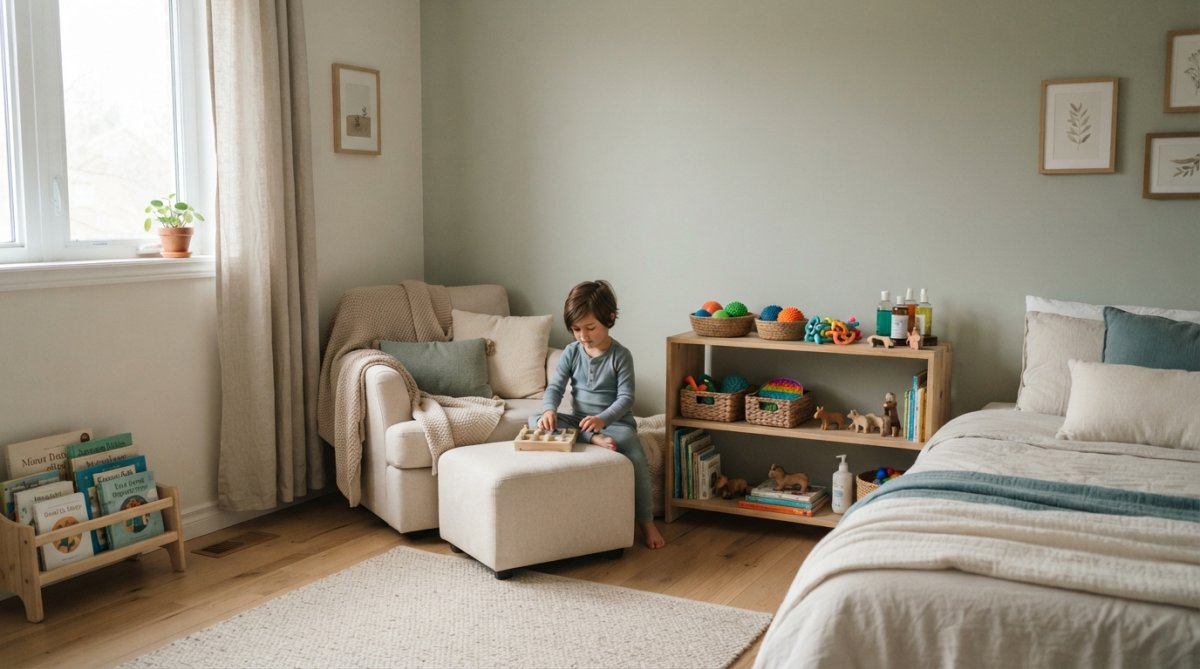
- Use warm, soft lighting from lamps
- Add dimmers to overhead lights
- Use fairy lights or string lights in calm areas
- Close curtains to reduce glare
- Avoid flickering lights
Sound management reduces auditory overload. Try:
-
Using soft background music instead of silence
-
Adding rugs and curtains to absorb sound
-
Keeping doors closed during quiet time
-
Using white noise machines
-
Keeping toys that make loud sounds in a separate area
-
Teaching family members to speak quietly
-
Only toys your child actively uses visible
-
Other items in closed storage
-
Shelves organised by colour or type
-
Surfaces mostly clear
-
Visual interest without chaos
Textures matter. Include:
- Soft blankets and cushions
- Smooth wood or plastic toys
- Textured items for tactile input
- A variety of safe textures to explore
- Avoid scratchy or uncomfortable fabrics
Scent control prevents olfactory overload. Avoid:
- Strong perfumes or air fresheners
- Heavily scented cleaning products
- Multiple competing smells
Instead, use:
-
Unscented or lightly scented items
-
Natural scents like lemon or lavender if your child likes them
-
Ventilation to keep air fresh
-
Cushions or bean bags
-
Soft lighting
-
Quiet, away from main activity
-
Fidget tools and comfort items
-
Clear signal that this is a safe zone
Working with Schools and Professionals
- What triggers overload for this child
- What strategies work best
- What progress has been made
- What adjustments might help next
How to manage sensory overload in children works best when parents, schools, and professionals collaborate. Life-OT specialises in creating these integrated plans. We work directly with your child, your family, and your school to develop strategies that actually work in real life.
| Strategy | Best For | How Often |
|---|---|---|
| Heavy work activities | Calming an overactive nervous system | Daily, 2-3 times |
| Sensory diet activities | Building tolerance and regulation | Integrated throughout day |
| Breathing techniques | Managing anxiety during overload | As needed, practised regularly |
| Environmental adjustments | Preventing overload at home and school | Ongoing |
| Movement breaks | Preventing buildup during structured time | Every 60-90 minutes |
| Calm corner retreat | Giving safe space to regulate | Available always |
Frequently Asked Questions
What are the signs of sensory overload in a child?
Signs include covering ears or eyes, withdrawing from activities, becoming unusually irritable or emotional, stimming (repetitive movements), difficulty following instructions, or seeking escape from situations. Some children become hyperactive or aggressive, while others shut down completely. The response varies by child and by which senses are triggered. If you notice a pattern of distress linked to specific environments or sensations, keep a diary to identify triggers, then discuss findings with your occupational therapist or GP.
How can I help my child calm down after sensory overload?
Move your child to a quieter, dimmer space away from triggers. Offer a predictable, calming activity like deep pressure (firm hugs), listening to familiar music, or using a weighted blanket. Keep your own tone calm and avoid sudden changes. Some children benefit from proprioceptive input (pushing against walls, jumping) or vestibular input (swinging, rocking). Avoid forcing eye contact or demanding explanation during the overload. Once calm, reflect together on what triggered it so you can plan prevention strategies together.
How does occupational therapy help children with sensory processing difficulties?
Occupational therapists assess how your child processes sensory information and design personalised interventions to improve regulation and coping. They use sensory diet activities tailored to your child's needs, teach strategies for different environments, and work with you and schools to embed support into daily routines. A person-centred approach means recommendations fit your family's real life, not generic advice. Therapy builds your child's confidence and independence by helping them recognise their own triggers and manage them effectively.
What is the difference between a tantrum and sensory overload?
A tantrum is usually a behavioural response to not getting what the child wants, it has a clear trigger (denied request) and the child may respond to reasoning or distraction. Sensory overload is a neurological response to too much sensory input; the child cannot simply 'switch off' and reasoning often makes it worse. Overload often happens without an obvious cause, lasts longer, and the child struggles to articulate what's wrong. Tantrums typically follow a pattern; overload responses vary. Understanding the difference helps you respond with empathy rather than discipline, and guides you towards sensory strategies rather than behavioural ones.