 ultimate-guide
How to Support School Transitions for Neurodiverse Children
Table of Contents
- Why School Transitions Hit Neurodiverse Children Harder
- Start Planning Early: A Timeline for School Transitions for Neurodiverse Children
- Getting the EHC Plan Transition Review Right
- Sensory Processing School Strategies That Travel Between Settings
- Neurodiversity Classroom Adjustments New Teachers Can Actually Make
- Occupational Therapy for School Readiness: What It Adds
- Common Mistakes Parents Make During Transitions
- Conclusion
- Frequently Asked Questions
Last Updated: September 19, 2026
Why School Transitions Hit Neurodiverse Children Harder
A school transition is not one event. It is a chain of small changes, and for a neurodiverse child each link in that chain lands harder than it does for most pupils. New buildings, new adults, new smells and sounds, unfamiliar toilets, different routines: the brain has to process all of it at once, often without the predictability that keeps anxiety manageable. (Source: SEND code of practice guidance)
That is the core of how to support school transitions for neurodiverse children. You are not managing a single moving day. You are managing sensory load, routine disruption and communication across several settings at the same time.
Start Planning Early: A Timeline for School Transitions for Neurodiverse Children
Planning for a school transition works best when it starts months ahead, not weeks. A gradual timeline gives a child time to visit, adjust and rehearse new routines while the familiar one is still in place.
Six Months Before the Move
Begin by gathering information. Ask the current school and the receiving school what support is available, and request any assessments or reports that describe your child's needs. Visits work better than descriptions: a short walk through the new corridors, a look at the classroom, and a photo you can take home all build familiarity.
The Final Month and First Week
In the last month, shift the focus to routine. Practise the new morning timetable, the route to school and the sequence of the day. During the first week, keep after-school demands low and protect downtime.
| When | Focus | Practical Action |
|---|---|---|
| Six months before | Information gathering | Request reports, arrange visits |
| Three months before | Familiarisation | Repeat visits, take photos |
| Final month | Routine rehearsal | Practise mornings and route |
| First week | Low demand | Protect rest, keep evenings calm |
Getting the EHC Plan Transition Review Right
An EHC plan transition review is the formal meeting where support is reviewed and updated before a child moves setting. It is your main opportunity to make sure provision is written down, specific and carried across to the new school.
The review should happen well before the move, not after it. Ask for the receiving school's SENCO to attend, and check that the plan names the actual strategies your child uses, not generic statements. Vague wording is the most common reason support collapses after a transition.
The SEND code of practice guidance sets out how reviews should be conducted, and it is worth reading before you attend so you know what the process should include.
Sensory Processing School Strategies That Travel Between Settings
Sensory processing school strategies only work if they are portable. The same approach needs to follow your child from home to classroom to any therapy session, or the child has to relearn regulation in every new environment.
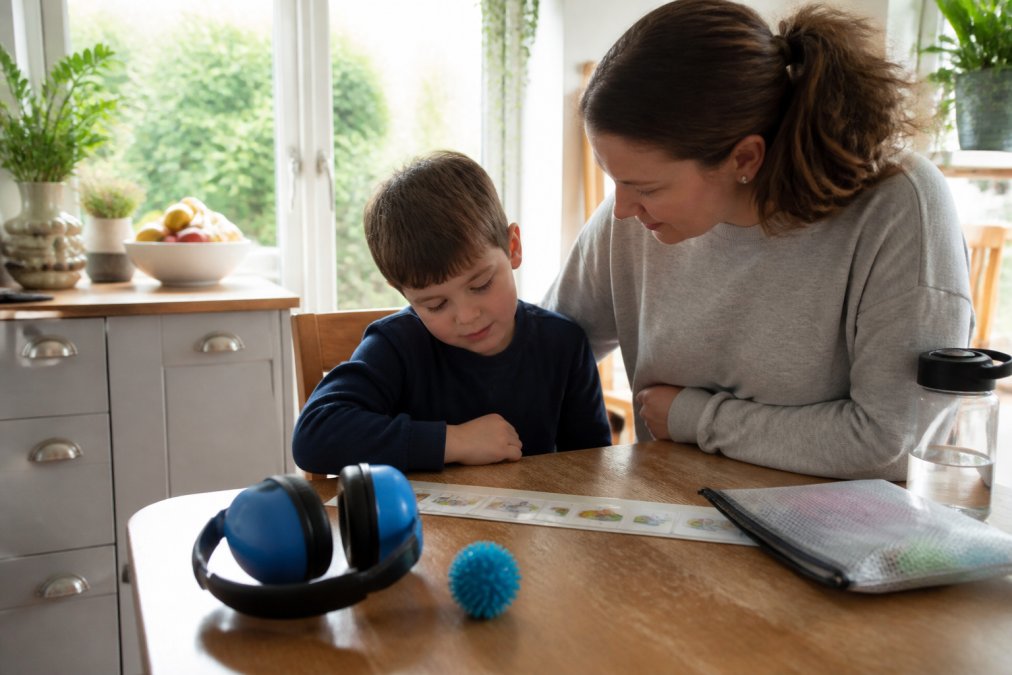
Build a small, consistent toolkit: ear defenders, a movement break, a visual timetable and a known quiet space. Then make sure every adult in every setting knows what each item is for and when to offer it. A common mistake is treating sensory tools as rewards. They are regulation aids, and withholding them usually backfires.
Neurodiversity Classroom Adjustments New Teachers Can Actually Make
Neurodiversity classroom adjustments do not need to be expensive or complicated. The ones that matter most are the ones a teacher can apply on day one without extra training.
- Seat the child away from the busiest corridor and door traffic
- Give instructions one step at a time, with a visual cue where possible
- Warn before transitions within the school day, not just at the start and end
- Allow movement breaks before, not after, the child becomes dysregulated
- Keep a consistent adult who checks in at the same time each day
What most guides miss is that adjustments fail when they depend on one person's memory. Write them down, share them with cover staff, and review them after the first half-term.
Occupational Therapy for School Readiness: What It Adds
Occupational therapy for school readiness looks at the practical skills a child needs to manage the school day: dressing, organising belongings, tolerating noise, sitting through a lesson and asking for help. It is not tutoring, and it is not a cure.
An occupational therapist assesses how a child's sensory and motor profile affects daily participation, then builds a plan that fits the real environment. At Life-OT, our therapists work in the community and co-create plans with parents and schools, so recommendations are usable in a real classroom rather than a clinic. Our team brings over 20 years of experience and a multidisciplinary approach that combines occupational therapy, sports therapy and nutrition.
For a fuller picture of how provision should be structured, the NHS information on children's therapy services explains how referrals and support typically work.
Common Mistakes Parents Make During Transitions
The biggest mistake is starting too late. Families often wait for the school to lead, then find the first term has already passed before anything is in place.
Other patterns we see regularly:
- Assuming the new school has read the old reports, when often they have not
- Focusing on the diagnosis instead of the daily strategies that follow from it
- Removing sensory tools once the child seems settled, which usually causes a regression
- Trying to manage everything alone rather than asking for a coordinated plan
- Changing too many routines at once during the first weeks
A common mistake is treating the transition as finished once the first week is over. The hard period is often weeks three to six, when novelty wears off and fatigue builds.
Conclusion
School transitions for neurodiverse children are a planning problem, and the families who plan early and keep strategies consistent across settings see the smoothest moves. If you want support that travels with your child, Life-OT offers community-based occupational therapy with specialist sensory integration, personalised intervention plans and realistic recommendations for home and school. Get in touch with Life-OT to build a transition plan that actually fits your child's day.
Frequently Asked Questions
How can I prepare my neurodivergent child for a new school?
Start with visits before the term begins. Ask the new school for a quiet tour, ideally when corridors are empty, and take photos of the classroom, toilets and dinner hall to review at home. Build a simple visual countdown of the days remaining. Practise the morning route so the journey feels familiar. If your child has sensory processing needs, agree with staff where they can go to regulate before the first day, so the plan is in place rather than improvised.
What legal support is available for children with SEN during school transitions?
If your child has an Education, Health and Care (EHC) plan, the local authority must review and amend it before a change of school, and the new setting must be named in the plan. The SEND Code of Practice sets out how this review should work. Without an EHC plan, support comes through SEN Support arrangements agreed with the school. Ask your local authority's SEND information, advice and support service for free guidance on your specific situation.
How do I communicate my child's sensory needs to a new teacher?
Write a one-page profile covering triggers, early warning signs, what helps and what to avoid. Keep it concrete: 'needs to sit away from the door because corridor noise distracts him' is more useful than 'has sensory issues'. Ask for a short meeting before term starts and offer to review the profile after two weeks. Sensory processing school strategies work best when staff can see the link between a behaviour and the environment, so include one or two examples from your child's current setting.
How can an EHC plan transition review assist with school transitions?
The EHC plan transition review is the formal point where outcomes, provision and placement are updated for the new setting. It should happen before the move, involve you and your child, and include staff from both the current and receiving school where possible. Check that the plan names the new school, that provision matches your child's current needs rather than last year's, and that any therapy input is written in specifically. If the plan is vague, ask for it to be amended before you agree.
What role does occupational therapy play in school readiness?
Occupational therapy for school readiness looks at the practical skills a school day demands: managing uniform and lunch, sitting tolerance, handwriting, organising belongings and coping with noise and crowds. An occupational therapist assesses where the gaps are and builds a plan that parents and school staff can carry out between sessions. At Life-OT, therapists work alongside families and schools so recommendations fit the actual classroom, not an ideal one. Ask your GP or school SENCO about referral routes.
What are the best strategies for managing anxiety during school changes?
Predictability reduces anxiety. Use a visual calendar, rehearse the new routine in short bursts, and keep home life as unchanged as possible during the transition weeks. Name the feelings without demanding they disappear, and give your child a concrete coping plan they can use at school, such as a card to show a teacher or an agreed quiet space. If anxiety is significantly affecting daily life, speak to your GP or the school's SENCO about additional support.