 Listicle
5 Best Therapeutic Exercise Programmes: Beginner Guide
Last Updated: November 19, 2026
Quick Summary
The five best therapeutic exercise programmes for beginners are Life-OT, Physitrack, Medbridge, Muscle Booster and BetterMe. Life-OT suits those who want clinician-led community occupational therapy, Physitrack and Medbridge require referral through a therapist, and Muscle Booster and BetterMe are app-based options with no clinical oversight.
- Therapeutic exercise is structured movement prescribed to restore function or manage pain, not to chase general fitness goals.
- Begin with five to ten minutes of mobility and bodyweight work, two or three times a week.
- A chair, a wall and a resistance band cover most beginner therapeutic exercises.
- Measure progress by daily tasks such as climbing stairs, not by the scales.
- Seek clinical advice first if you have chest pain, unexplained breathlessness, sudden weakness or a recent fall.
Table of Contents
- Why Therapeutic Exercise Is Different From General Fitness
- How We Selected These Therapeutic Exercise Programmes
- 1. Life-OT: Community-Based Occupational Therapy
- 2. Physitrack: Clinician-Led Rehabilitation at Home
- 3. Medbridge: Education-Led Recovery Programmes
- 4. Muscle Booster: Guided Strength for Nervous Beginners
- 5. BetterMe: An All-in-One Low-Impact Exercise Programme for Beginners
- Beginner Rehabilitation Exercises at Home: What to Expect
Why Therapeutic Exercise Is Different From General Fitness
Therapeutic exercise is structured movement prescribed to restore function, manage pain or rebuild a specific capability after injury, illness or a change in health, rather than to chase general fitness goals. That distinction matters more than most beginners realise. A general workout plan assumes a healthy baseline. A therapeutic programme starts from where your body actually is.
The authors of Selecting Resistance Training Exercises for Novices examined which exercises are genuinely appropriate for people new to resistance work, including older adults. Their work makes a useful point: a novice-friendly exercise is not simply a lighter version of an advanced one.
A common pattern is for people to follow a general workout app, feel worse, and conclude exercise is not for them. Often the exercise itself is fine; the selection and progression may be what is wrong.
Watch out: the biggest mistake beginners make is copying a general fitness plan while managing an injury or long-term condition. That is how flare-ups happen. If you are unsure how therapeutic exercise differs from physiotherapy-style rehabilitation, our guide on occupational therapy versus physiotherapy explains where the two overlap and which support suits daily life and recovery.
How We Selected These Therapeutic Exercise Programmes
Most beginner exercise round-ups present a list and leave you to work out which option suits your body.
Therapeutic intent. Is the programme designed around rehabilitation and function, or general fitness with a therapeutic label?
Professional oversight. Who sets and reviews the programme? Clinician-prescribed platforms such as Physitrack and Medbridge put a therapist in charge of exercise selection and progression.
Adaptability to pain, injury and limited mobility. Can the programme regress an exercise when symptoms flare, or does it only progress?
Accessibility and equipment. Does it require a gym, a subscription, a referral or a smartphone?
Measurement of progress. Does the programme track function, range of motion, balance, strength or pain interference, or only weight and workout streaks?
Adherence and realistic expectations. How long are the sessions, how often are they scheduled, and does the programme explain rest and gradual progression?
| Programme | Type | Professional Oversight | Best For | Access |
|---|---|---|---|---|
| Life-OT | Community occupational therapy | Clinician-led, bespoke | Daily function and independence | Direct referral or enquiry |
| Physitrack | Clinical exercise platform | Therapist-prescribed | Supervised rehabilitation | Via a healthcare provider |
| Medbridge | Education and exercise platform | Therapist-prescribed | Condition education | Via a clinician |
| Muscle Booster | Guided app | None | Nervous strength beginners | Subscription |
| BetterMe | All-in-one app | None | Low-impact habits | Subscription |
Before you start any programme, a practical safety screen is sensible. If you have chest pain, unexplained breathlessness, sudden weakness, numbness or a recent fall, seek clinical advice before exercising.
Watch out: a programme that never asks about your symptoms or daily limitations is unlikely to be therapeutic, however polished its videos are.
1. Life-OT: Community-Based Occupational Therapy
Life-OT is one option for people who need a therapeutic exercise programme rather than a generic workout. Its community-based occupational therapy aims to restore the skills of daily living, and its personalised intervention plans are built around the individual's goals and environment.
Life-OT brings together occupational therapy, sports therapy and nutrition, and offers specialist sensory integration interventions. Sessions are community-based, so recommendations can be realistic for the home, school or workplace.
Pros and Cons
Pros:
- Personalised intervention plans built around your goals and environment
- Multidisciplinary team covering movement, daily function and nutrition
- Community-based, so recommendations are realistic for home and school
- Strong support for parents and carers alongside the individual
Cons:
- Requires an enquiry and assessment before a programme is agreed
- Not a self-serve app, so you cannot start the same day
Best for: people who want a clinician to assess, plan and review their programme. Skip if: you only want a generic guided workout with no assessment.
2. Physitrack: Clinician-Led Rehabilitation at Home
Physitrack is a clinical platform that therapists use to prescribe and monitor home exercise. You receive high-quality exercise videos, a secure portal and outcome tracking, all overseen by the professional who set the programme. It is a strong route for anyone already under a physiotherapist or rehabilitation team.
The limitation is access. Physitrack is not a consumer product you can simply sign up to; it reaches you through a healthcare provider. If you are not currently under a therapist, this route is not open to you yet.
Best for: patients with an existing therapist who want supervised home exercise. Skip if: you are self-directing your recovery.
3. Medbridge: Education-Led Recovery Programmes
Medbridge pairs a large library of therapeutic exercises with patient education, which is its real strength. Understanding your condition helps you pace yourself and recognise when to stop. Programmes are customisable and include reminders that support consistency.
Like Physitrack, Medbridge is built for clinics and therapists rather than direct consumer purchase. The educational content is excellent, but you will typically encounter it through a clinician managing your recovery.
Best for: people who want to understand their condition as they rehabilitate. Skip if: you need a programme you can set up yourself today.
4. Muscle Booster: Guided Strength for Nervous Beginners
Muscle Booster removes the guesswork. It generates a plan around your goals, shows video demonstrations of each movement and tracks progress, which suits anyone who finds the planning side of strength training paralysing.
What it cannot do is adapt to a clinical problem. There is no therapist reviewing your form or adjusting for pain. For a healthy beginner who simply needs structure, that is fine. For anyone managing an injury, it is a gap.
Best for: healthy beginners who want a guided strength plan without planning it themselves. Skip if: you are rehabilitating an injury or managing persistent pain.
5. BetterMe: An All-in-One Low-Impact Exercise Programme for Beginners
BetterMe combines beginner-friendly routines with meal planning, calorie tracking and community challenges, aiming at overall habits rather than a single goal. It is a broad package, and its low-impact options may suit people returning to movement gently.
The breadth is also the weakness. There is no clinical oversight, and the nutrition tracking may not suit anyone with a history of disordered eating. It works best as a general wellbeing tool, not a therapeutic one.
Best for: beginners who want exercise and nutrition guidance in one place. Skip if: you need condition-specific rehabilitation.
Beginner Rehabilitation Exercises at Home: What to Expect
A good beginner programme at home starts with short, frequent sessions of gentle movement rather than long, hard ones. Expect to begin with five to ten minutes of mobility and bodyweight work, two or three times a week, and to progress only when the current level feels genuinely easy. The aim in the first fortnight is consistency and confidence, not intensity.

Pacing is the part most beginners get wrong. Building slowly protects your energy and reduces flare-ups; our guide to using pacing for chronic pain day to day explains how to apply it. Pairing exercise with a fixed daily slot also helps, and our advice on building daily routines that support you shows how to make the habit stick.
Gentle Exercises to Improve Mobility
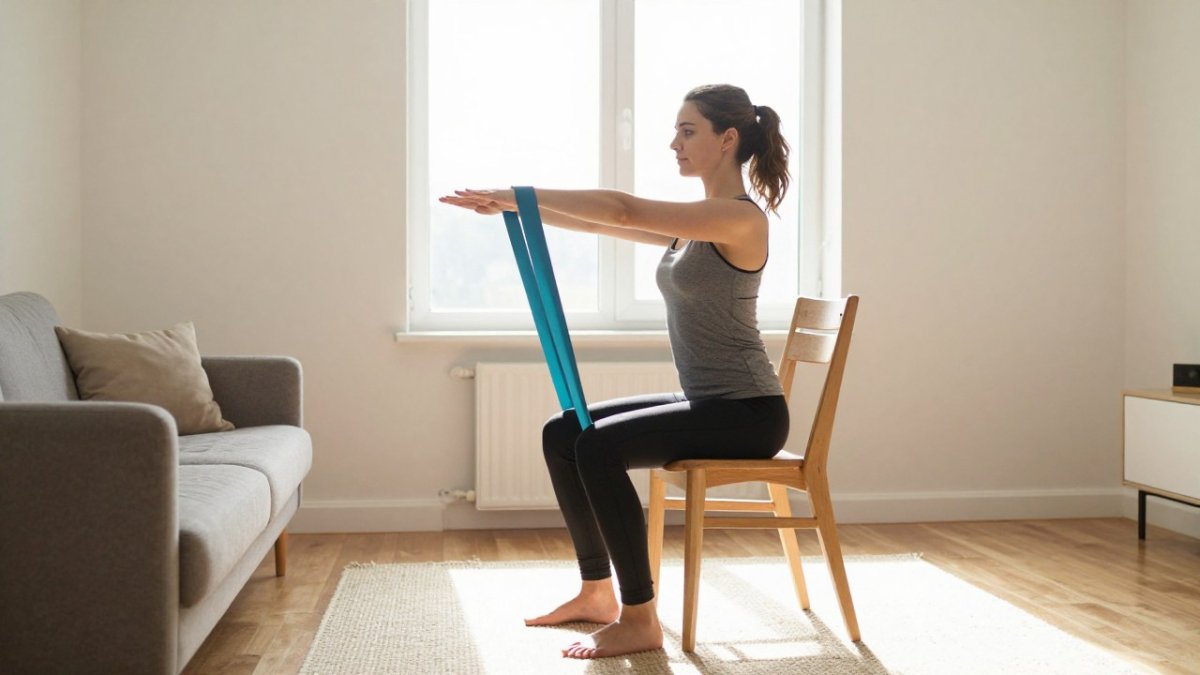
Start with range-of-motion work you can do seated or standing with support: shoulder circles, ankle pumps, seated knee extensions and gentle neck turns. Add a resistance band for light upper-body work once the movement feels comfortable. Move slowly, breathe steadily and stop short of pain rather than pushing through it. If a movement causes sharp pain, numbness or dizziness, stop and seek advice before continuing.
Beginner Balance Exercises
Balance work is where beginners see quick, practical gains. Try standing on one foot beside a worktop, heel-to-toe walking along a worktop, and sit-to-stand from a chair without using your hands. Keep a solid surface within reach at all times. If balance is limited, begin with seated marching or holding the counter with both hands, and progress to one hand and then no hands only when you feel steady.
A Simple Weekly Structure
| Day | Focus | Duration | Equipment |
|---|---|---|---|
| Monday | Mobility and range of motion | 10 minutes | None |
| Wednesday | Strength: sit-to-stand, wall press-ups, bridges | 15 minutes | Chair |
| Friday | Balance and core stability | 10 minutes | Counter for support |
| Daily | Gentle walking or stretching | 5-10 minutes | None |
Duration
Measuring Progress Beyond Weight
Measure progress by what you can do in daily life, not by the scales. Climbing stairs without pausing, carrying shopping, or getting off the floor more easily are the outcomes that matter. A simple weekly note of one functional task, your pain level before and after, and how many sessions you completed gives you a clearer picture than weight alone. If you feel nervous about starting, our guidance on ways to increase confidence every day is a sensible first step.
Recovery, Adherence and Realistic Expectations
Rest is part of the programme. Soreness that settles within a day or two is common when you start; pain that worsens or lasts longer is a signal to reduce the load and seek advice. Aim for two or three sessions a week with a rest day between strength work, and keep the daily walking or stretching gentle. Most beginners notice small functional gains within a few weeks, but rebuilding strength and confidence takes longer than a general fitness plan suggests. If you miss a session, resume at the previous level rather than trying to catch up.
Watch out: progressing by adding more exercises rather than making the current ones slightly harder is a common cause of flare-ups in the first month.