 blog
Top 5 Adaptive Sports for Children with Autism: A Parent's Guide
Last Updated: November 17, 2026
Quick Summary
The top 5 adaptive sports for children with autism are swimming, martial arts, running and track, cycling, and gymnastics. We ranked each adaptive sports option against five criteria: sensory load can be lowered, structure is predictable, progress is visible, adaptations are routine, and social load is adjustable.
- Start with your child's interests, not a list of diagnoses, because interest predicts sticking power.
- Book a taster session rather than a term, and try a second sport if the first does not fit.
- Ask clubs about staff autism training, class ratios, sensory conditions, communication and DBS safeguarding checks.
- Swimming adaptations include a poolside visual schedule, a consistent lane and instructor, and quiet sessions.
- Judge swimming by child-centred signs such as entering the water willingly and asking to go back.
Table of Contents
- Why Adaptive Sports Matter for Autistic Children
- How to Choose a Sport for an Autistic Child
- 1. Swimming: Sensory-Friendly Sports Activities in the Water
- 2. Martial Arts: Structure, Balance and Confidence
- 3. Running and Track: Predictable Routines and Personal Bests
- 4. Cycling: Building Coordination and Independence
- 5. Gymnastics: Core Stability and Spatial Awareness
- Swimming for Autistic Children: What Parents Should Know
- Frequently Asked Questions
Why Adaptive Sports Matter for Autistic Children
Adaptive sports are physical activities changed to suit a child's needs, so they can take part, build skills and enjoy movement without being asked to fit a standard mould. Research reviewed in Sport and Autism: What Do We Know so Far? links sport to gains in movement and social skills, and a 2023 study on sports activities and motor and social skills reported positive effects on motor skills, social skills and autistic traits.
Here is what most guides get wrong: they list sports and stop there. The sport is only half the story.
Sport builds balance, coordination and confidence. It also gives your child a place to belong. For families, that is often the bigger prize.
If you want support beyond the poolside or the pitch, our therapy support for autistic teenagers shows how personalised therapy builds confidence and daily living skills alongside sport.
How to Choose a Sport for an Autistic Child
Start with your child's interests, not a list of diagnoses. A child who loves water will take to swimming faster than to a team game, and interest predicts sticking power better than any assessment.
Then match the sport to these factors:
- Sensory needs: loud whistles, bright lights and crowds can overwhelm some children
- Structure: predictable routines and clear rules help many autistic children settle
- Motor skills: look for a sport that builds on what your child can already do
The five criteria behind our top five
Most guides list sports and stop there. We ranked the five activities in this article against five criteria, and we are stating them so you can apply the same test to any sport your child wants to try:
- Sensory load can be lowered. The setting can be made quieter, dimmer or less crowded without removing the activity itself.
- Structure is predictable. Sessions follow a repeatable pattern the child can learn and anticipate.
- Progress is visible. The child can see their own improvement through a personal best, a grading, a new skill or a completed length.
- Adaptations are routine, not exceptional. Coaches and clubs already modify equipment, instructions or group size as standard practice.
- The social load is adjustable. The child can take part alone, in a small group or in a team, and move between those as their confidence changes.
A sport that scores well on all five is easier to sustain. A sport that scores well on only one or two may still work, but it will need more support from you and the coach.
How to evaluate a club or coach before you enrol
A welcoming club matters more than a prestigious one. Before you commit, ask these questions, in writing if a phone call is difficult:
- Staff experience: Have the coaches worked with autistic children before, and what training do they hold? Ask specifically about autism awareness and sensory needs.
- Class size and ratios: How many children per coach, and can that be reduced for a taster session?
- Sensory conditions: What are the noise levels, lighting and crowding like at the time your child would attend? Can the club offer a quieter session?
A common pattern is that the best club for an autistic child is not the one with the best facilities, but the one whose coach answers these questions without defensiveness.
A child-led trial plan
Do not assume one sport suits all autistic children. Use a low-pressure process instead:
- Explore interests at home. Watch videos together, read a book about the sport, or try a five-minute version in the garden or living room.
- Book a taster session, not a term. Ask the club whether your child can attend one session before you pay for a block.
- Prepare the child. Show photos of the venue, the coach and the equipment, and agree a signal your child can use if they need to stop.
- Review afterwards, not during. Ask how they felt, whether they would go back, and what they would change. A calm child who asks to return is a better sign than a perfect performance.
- Try a second sport if the first does not fit. Two or three taster sessions across different activities is often more useful than persisting with one that causes distress.
Watch out: a child who is quiet during a session may still be overwhelmed afterwards. Behaviour on the journey home and the following evening is often the clearest signal of whether the session was a good fit.
Our gross motor skills activities guide has adaptable ideas to build balance and strength before you choose.
We ranked the five activities in this article against five criteria, and you can apply the same test to any sport your child wants to try.
| Criterion | What to look for |
|---|---|
| Sensory load can be lowered | Setting made quieter, dimmer or less crowded |
| Structure is predictable | Sessions follow a repeatable pattern |
| Progress is visible | Personal best, grading, new skill or completed length |
| Adaptations are routine | Clubs modify equipment, instructions or group size as standard |
| Social load is adjustable | Child can move between alone, small group and team |
1. Swimming: Sensory-Friendly Sports Activities in the Water
Swimming can be a strong choice because water removes many of the balance demands that land sports place on a child.
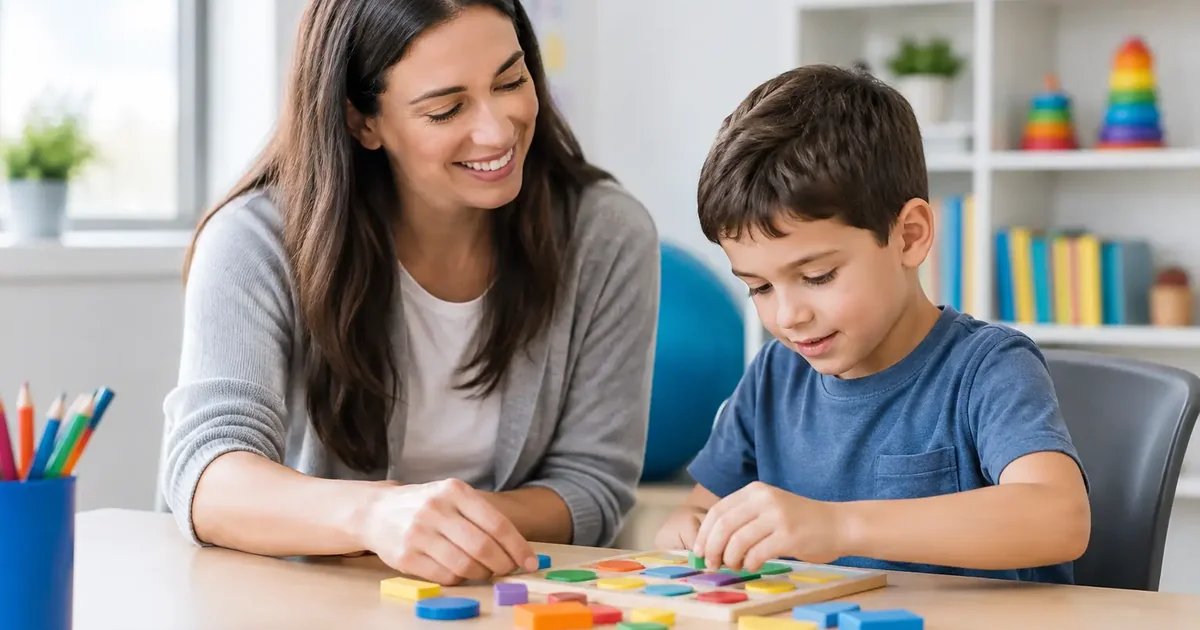
Individual sports like swimming also allow steady repetition. Your child races their own time, not another child.
(https://life-ot.co.uk/content/services/) and see the next steps.2. Martial Arts: Structure, Balance and Confidence
Karate and judo can suit children who thrive on clear structure.
Balance and core stability improve through stance work. Confidence grows with each belt or grading, a visible marker of progress.
Look for a club that teaches in small groups and uses visual instructions.
Group settings also build social interaction and teamwork. If your child enjoys the social side, our group therapy offers structured connection and belonging.
3. Running and Track: Predictable Routines and Personal Bests
Running is the simplest entry point on this list. No equipment, no team selection, no crowd. Just a pair of trainers and a route.
Track and field suits autistic children who like measurable progress. A personal best is objective.
Start with short, familiar loops. Build distance slowly. A running club with a quiet warm-up and clear instructions works better than a busy race day.
4. Cycling: Building Coordination and Independence
Cycling builds coordination, spatial awareness and core stability at the same time. It is also a life skill.
Balance bikes and adapted trikes make the start easier. Practise on quiet, flat ground before trying roads or busy paths.
For children who struggle with coordination, our coordination activities guide has practical ways to build those skills at home.
Watch out: traffic and busy cycle paths raise real safety concerns.
5. Gymnastics: Core Stability and Spatial Awareness
Gymnastics develops core stability, balance and spatial awareness in a structured setting. Equipment can be adapted, and many clubs offer sensory-friendly sessions with softer lighting and smaller groups.
The sport rewards repetition. A child practises a skill until it becomes automatic, which suits the way many autistic children learn.
Look for a coach who breaks movements into small steps and uses visual instructions. Ask about group sizes and noise levels before booking.
Swimming for Autistic Children: What Parents Should Know
Swimming deserves its own section because water safety matters.
Ask three questions before you book:
- Does the instructor have experience with autistic children?
- Can the pool offer a quiet session or a consistent lane?
- Are visual supports and ear defenders welcome?
Progress may be slow. Celebrate small wins: entering the water calmly, putting a face in, floating. Each step builds confidence and self-esteem.
If you are ready to add professional support around sport and daily life, you can explore our services and see the next steps.
Finding the right sport is only part of the picture.
Frequently Asked Questions
What are the best sports for a child with autism?
There is no single best sport, but swimming, martial arts, running, cycling and gymnastics are often strong starting points because they offer predictable routines and clear structure. Swimming provides full-body sensory input, martial arts teach balance and coordination, and running builds fitness through repetition. The right choice depends on your child's individual interests, sensory needs and motor skills. A trial session can help you judge whether a sport suits them before committing.
Can team sports work well for children with autism?
Yes, team sports for autistic children can work well when the environment is structured and supportive. Sports like football or basketball offer social interaction and teamwork, but the noise and unpredictability can be challenging. Look for clubs with smaller groups, clear visual instructions and coaches experienced in inclusive sports. Visiting a session first and speaking to the coach about your child's sensory needs will help you decide whether a team setting is a good fit.
How can I choose an adaptive sport for my autistic child?
Start by observing what your child already enjoys, whether that is water play, running, climbing or riding a bike. Consider their sensory needs, motor skills and tolerance for group settings. Then look for local adaptive sports programmes and ask about coach experience, group size and sensory-friendly adjustments. A short trial session is the best way to test whether the sport and the club suit your child. Occupational therapy input can also help match a sport to your child's goals.
What should I ask a sports club before enrolling my child?
Ask how the club adapts activities for autistic children, what the coach-to-child ratio is, and whether staff have training in inclusive sports. Find out about sensory-friendly features such as quiet spaces, visual schedules and predictable routines. Ask if you can observe a session first and whether a trial is available. Also check the cost, equipment requirements and cancellation policy. Clear answers to these questions show the club is set up to support your child well.