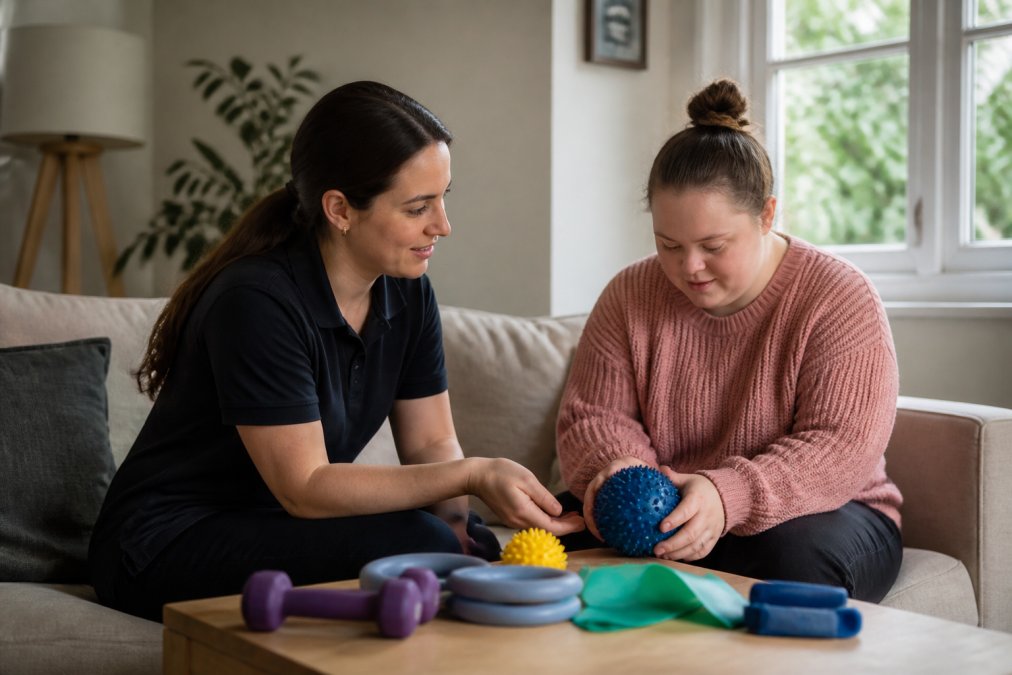
 Ultimate guide
Integrated Occupational Therapy: Benefits Explained
Table of Contents
- What Integrated Occupational Therapy Means
- How Occupational Therapy for Daily Living Skills Works
- Restoring Independence Through Bespoke Intervention Plans for Adults
- Why Benefits of Multidisciplinary Therapy Teams Matter
- Integrated Occupational Therapy Across Different Life Stages
- Real Outcomes: What Integrated Occupational Therapy Achieves
- Frequently Asked Questions
Last Updated: September 25, 2026
What Integrated Occupational Therapy Means
Integrated occupational therapy is a holistic approach to rehabilitation that combines occupational therapy with complementary disciplines, such as sports therapy and nutrition, to address the full range of factors affecting a person's independence and quality of life. Rather than treating physical, emotional, or cognitive challenges in isolation, integrated occupational therapy recognises that meaningful recovery happens when multiple aspects of wellbeing are addressed together.
At Life-OT, we understand how this approach can transform outcomes. A person recovering from stroke doesn't just need movement training; they need nutritional support to fuel recovery, emotional encouragement to rebuild confidence, and practical strategies tailored to their home environment. When these elements work together, people can regain not just function but genuine independence, the ability to do the things that matter to them.
The term "integrated" signals something important: coordination. It means your therapist isn't working in a silo, issuing generic advice that doesn't fit your life. It means the recommendations you receive at your occupational therapy session connect logically to the nutrition guidance you're following and the movement work you're doing. For families and individuals navigating recovery, this coherence makes an enormous difference.
How Occupational Therapy for Daily Living Skills Works
Occupational therapy for daily living skills focuses on the practical tasks that make up everyday life: dressing, cooking, managing finances, personal hygiene, medication management, and community participation. The word "occupational" here doesn't mean paid work, it means the occupations that fill your day, the activities that give life structure and meaning.
When someone's independence is threatened by injury, illness, or developmental challenge, these everyday tasks become obstacles. A therapist trained in occupational therapy for daily living skills doesn't simply tell you what you should be able to do. Instead, they observe how you actually perform these tasks, identify the specific barriers, whether physical, cognitive, or environmental, and work with you to rebuild capability in ways that fit your real life.
This might mean practising meal preparation in your own kitchen rather than a clinical setting, or working through a budgeting task using the actual bills and bank statements you manage. The specificity matters. Generic advice rarely sticks; advice tailored to your routine, your home, and your goals tends to create lasting change. Many people find that when therapists take this individualised approach, recommendations feel achievable rather than theoretical.
Restoring Independence Through Bespoke Intervention Plans for Adults
Bespoke intervention plans for adults are personalised programmes designed around your specific situation, goals, and environment. Rather than applying a standard protocol to every client, a bespoke approach means your plan reflects who you are, what matters to you, and what barriers you actually face.
For an adult recovering from stroke, a bespoke plan might prioritise returning to work or managing a household. For someone managing a chronic condition alongside anxiety, the plan might focus on building confidence in community settings while addressing physical limitations. The structure adapts to the person, not the other way around.
Creating a bespoke intervention plan typically involves an initial assessment where your therapist observes you performing relevant tasks, asks detailed questions about your goals and daily routines, and gathers information about your home and work environments. From this foundation, they co-create a plan with you, not for you. Your input shapes priorities and strategies. This collaborative approach increases the likelihood that you'll actually follow through, because the plan reflects your values and circumstances.
Life-OT's approach to bespoke intervention plans emphasises realistic, usable recommendations. Rather than prescribing exercises that won't fit into your week, or strategies that don't match your home setup, we work within the constraints of real life. This pragmatism is what makes the difference between a plan that sits in a drawer and one that genuinely restores independence.
Why Benefits of Multidisciplinary Therapy Teams Matter
When occupational therapists, sports therapists, and nutritionists work as a coordinated team rather than separate providers, the benefits multiply. A multidisciplinary approach recognises that independence isn't a single-discipline problem, it's interconnected. Movement capacity depends partly on nutritional status. Confidence in daily tasks depends partly on physical capability and emotional wellbeing. Sustainable recovery requires all these threads to align.
In a fragmented system, you might see an occupational therapist on Monday, a sports therapist on Wednesday, and a nutritionist on Friday, with little communication between them. Each gives you advice that makes sense in isolation but may contradict or duplicate what you heard elsewhere. You end up managing three separate plans rather than one coherent strategy.
Multidisciplinary teams eliminate this friction. When your therapists communicate regularly, they can spot opportunities for reinforcement. If your occupational therapist is working on kitchen independence, the sports therapist can ensure you're building the specific strength and endurance that cooking demands. The nutritionist can recommend foods that support both your recovery goals and your ability to prepare meals independently. The recommendations feel like they're pulling in the same direction.
Research from the National Institute for Health and Care Excellence (NICE) emphasises the importance of coordinated, person-centred care across health and social services. A multidisciplinary team approach aligns with this evidence, it delivers better outcomes because it addresses the whole person rather than isolated symptoms.
Integrated Occupational Therapy Across Different Life Stages
Children with Developmental Delays and Sensory Processing Differences
For children with developmental delays or sensory processing differences, integrated occupational therapy addresses the barriers that affect learning, play, and social participation. A child with sensory processing difficulties might struggle with the sensory demands of a classroom, fluorescent lighting, background noise, unexpected touch, making it hard to focus on learning. An occupational therapist trained in sensory integration works to help the child process sensory information more effectively, often through carefully designed activities that build tolerance and regulation.
The integrated approach adds crucial layers. Sports therapy techniques might help the child develop body awareness and coordination. Nutritional support might address factors that influence attention and regulation. And critically, the therapist works closely with parents and teachers, ensuring that strategies used in therapy sessions are reinforced at home and school. A child doesn't develop independence in isolation, they develop it through repeated, supported practice across all their environments.
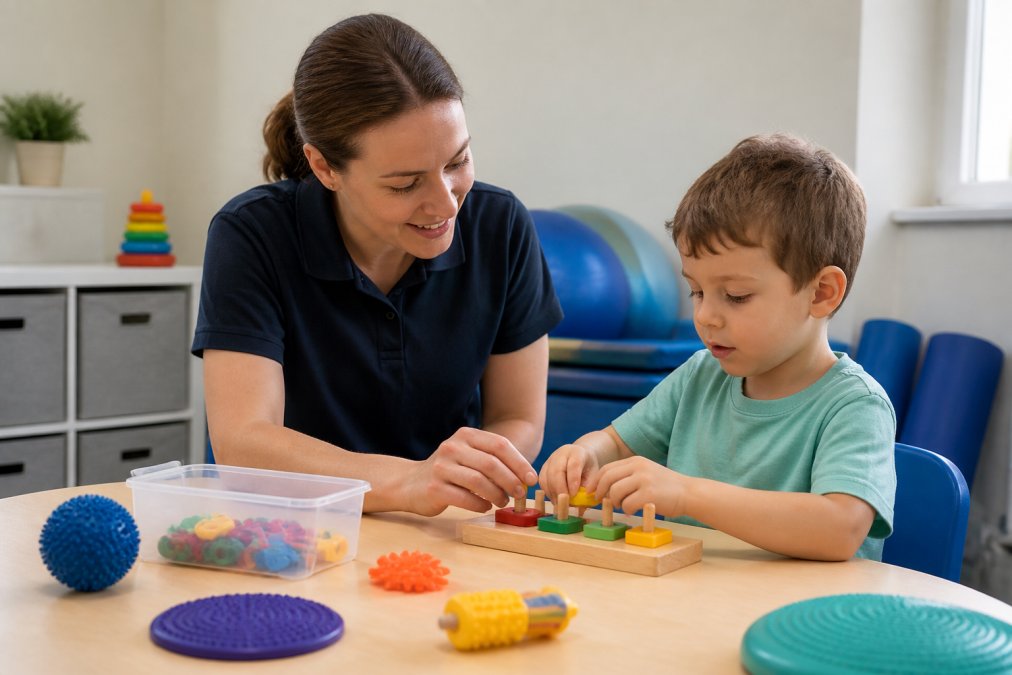
Many families find that when integrated support is coordinated across home, school, and therapy, children can make good progress. The consistency matters. A child who practises sensory regulation strategies at home, receives reinforcement at school, and builds on these foundations in therapy sessions can develop real, durable skills rather than temporary improvements that fade when therapy ends.
Young People in Transition to Adult Services
The transition from children's services to adult services is a critical juncture. Young people who've received occupational therapy support as children often face a gap when they turn 18 or 19, services change, providers change, and the continuity that supported their development disappears. Integrated occupational therapy can bridge this gap, ensuring that the progress made during childhood translates into genuine adult independence.
During transition, an integrated approach helps young people develop life skills that extend beyond what they learned as children. Managing finances, maintaining a household, navigating employment or further education, building community connections, these are the occupations of adulthood, and they require different support than childhood occupational therapy provides. A multidisciplinary team can address the physical, cognitive, emotional, and practical dimensions of this transition simultaneously.
The alternative, starting from scratch with a new provider who doesn't know the young person's history, can sometimes mean regression. Progress made over years can be lost because new providers lack context. Integrated occupational therapy services that prioritise continuity and coordination aim to prevent this loss and build on existing foundations.
Adults Recovering from Stroke, Brain Injury, or Surgery
For adults recovering from stroke or brain injury, integrated occupational therapy addresses the complex, interconnected effects of neurological injury. Stroke can affect movement, sensation, cognition, emotion, and speech. A person might regain some physical function but struggle with confidence, or regain cognitive clarity but face fatigue that limits activity. A single-discipline approach often misses these interconnections.
Integrated occupational therapy recognises that independence after stroke requires physical recovery, yes, but also emotional resilience, nutritional support to fuel healing, and practical strategies adapted to changed abilities.
Real Outcomes: What Integrated Occupational Therapy Achieves
Integrated occupational therapy aims to produce measurable changes in people's lives. Someone who couldn't prepare a meal independently may learn to do so safely. A person who felt trapped by anxiety in new environments may gradually rebuild confidence and community participation. An adult recovering from brain injury may return to work, or to meaningful volunteer activity, or to managing their household with genuine autonomy rather than dependence.
| Approach | Focus | Outcome |
|---|---|---|
| Standard rehabilitation | Single discipline, generic protocol | Temporary improvement, often fades |
| Integrated occupational therapy | Multiple disciplines, personalised plan | Sustained independence, real-world application |
| Fragmented services | Separate providers, no coordination | Confusion, contradictory advice, slower progress |
| Multidisciplinary coordination | Aligned team, shared goals | Reinforced learning, faster progress, lasting change |
Frequently Asked Questions
What is integrated occupational therapy?
Integrated occupational therapy combines traditional occupational therapy with complementary disciplines like sports therapy and nutrition to address physical, emotional, and cognitive challenges holistically. Rather than treating one aspect in isolation, this approach recognises that daily living skills, movement, nutrition, and emotional well-being are interconnected. A therapist working within an integrated model develops bespoke intervention plans that account for the whole person, making recommendations practical and usable across home, school, and community settings.
Who benefits most from an integrated approach to rehabilitation?
Adults recovering from stroke or brain injury benefit significantly because integrated support addresses both physical recovery and the emotional confidence needed to rebuild independence. Children with sensory processing differences or neurodevelopmental conditions gain from coordinated support across movement, nutrition, and daily routines. Young people transitioning from children's to adult services benefit from seamless, multidisciplinary planning that prevents gaps in support. Adults with mental health challenges or neurodevelopmental conditions find that integrated plans help them develop sustainable routines and community participation. Essentially, anyone whose independence depends on more than one factor, movement, nutrition, emotional regulation, and skill practice, benefits from integration.
How does integrated occupational therapy support independent living?
Integrated occupational therapy rebuilds independence by addressing the root barriers to daily living skills. A therapist assesses not just what someone cannot do, but why: is it weak grip strength, poor body awareness, low confidence, nutritional fatigue, or lack of practice in a realistic environment? The bespoke intervention plan then targets those specific barriers across all settings, home, school, work, community. By combining movement improvement, nutritional support, emotional development, and practical skill practice, integrated therapy creates lasting change. The person doesn't just temporarily improve in a clinic; they develop genuine capability and confidence to manage daily tasks independently in their own life.