 blog
7 Key Differences Between Sensory Processing and Autism
Last Updated: October 25, 2026
Quick Summary
Sensory processing disorder autism differs in that sensory processing disorder (SPD) is a condition where the nervous system struggles to receive, interpret, and respond to sensory information, whilst autism spectrum disorder is a neurodevelopmental condition affecting social communication and interaction. Though distinct, sensory processing disorder autism cases show both can occur together.
- Hypersensitive children with SPD cover their ears at normal sounds or refuse certain textures, whilst under-sensitive children seek intense sensory experiences like spinning.
- A 2023 review reports autism prevalence increased from 1 in 150 children to 1 in 36 children over 20 years.
- 95.8% of participants with autism spectrum disorder scored as having probable or definite sensory-processing differences in a 2020 study.
- Sensory processing disorder assessment involves structured questionnaires, observation of sensory responses, and interviews with parents and teachers.
- Effective support strategies include reducing sensory clutter, providing predictable routines, offering sensory breaks, and creating calm-down spaces.
Table of Contents
- What Is Sensory Processing Disorder?
- What Is Autism Spectrum Disorder?
- Understanding Sensory Processing Disorder Symptoms in Children
- Sensory Processing Disorder Assessment: How Diagnosis Works
- Where Sensory Issues at School Create Real Challenges
- Sensory Processing Disorder Support Strategies That Work
- When Sensory Processing Disorder and Autism Overlap
- Getting the Right Assessment and Personalised Support
- Frequently Asked Questions
What Is Sensory Processing Disorder?
Sensory processing disorder autism differs in important ways: sensory processing disorder (SPD) is a condition where the nervous system struggles to receive, interpret, and respond to sensory information from the environment, whilst it's not the same as autism, though the two can occur together. People with SPD may be hypersensitive to sounds, textures, lights, or smells, or they may be under-sensitive and seek out intense sensory experiences.
Think of it like a faulty filter. Most people's brains automatically tune out background noise or ignore an itchy clothing tag. With SPD, that filtering system misfires. A child might cover their ears at normal conversation volume or refuse to wear certain fabrics because they feel unbearable.
SPD affects how someone processes and responds to sensory input, but it doesn't define how they think, learn, or interact socially in the same way autism does. The condition can exist on its own or alongside other diagnoses. According to research on sensory processing differences in individuals with autism, sensory difficulties are common in many conditions, not just autism.
At Life-OT, we work with children and adults experiencing sensory processing challenges. Understanding whether someone has SPD, autism, or both changes how support is designed. The interventions look different. The goals shift. The environment setup matters in distinct ways.
What Is Autism Spectrum Disorder?
Autism spectrum disorder (ASD) is a neurodevelopmental condition that affects how someone communicates, processes social information, and engages with the world. It's present from birth, though it may not be recognised until later in childhood or adulthood.
Autism involves differences in:
- Social communication and interaction
- Patterns of behaviour and interests
- How someone processes information overall
A person with autism might struggle to read facial expressions, prefer predictable routines, or have intense, focused interests. They may also experience sensory sensitivities, but sensory differences are not what defines autism itself.
The key distinction: autism is fundamentally about how the brain is wired for social understanding and communication. SPD is about how the nervous system processes sensory information. They're different systems, even though they can overlap.
Autism prevalence has increased significantly. A 2023 review reports that autism prevalence increased from 1 in 150 children to 1 in 36 children over the preceding 20 years, according to research on sensory processing differences in individuals with autism. This rise reflects better awareness and broader diagnostic criteria, not necessarily a true increase in occurrence.
Understanding Sensory Processing Disorder Symptoms in Children
Sensory processing disorder symptoms in children vary widely depending on whether the child is hypersensitive or under-sensitive to stimuli.
Hypersensitive children may show these signs:
- Cover ears or become distressed at normal sounds
- Refuse certain textures, clothing, or food
- Avoid bright lights or cover eyes
- Struggle in crowded or busy environments
- Become overwhelmed during transitions
Under-sensitive children often display:
- Seeks intense sensory experiences (spinning, crashing, loud sounds)
- Don't respond when their name is called
- Crave movement and physical activity
- Seem unaware of pain or temperature
- Appear clumsy or uncoordinated
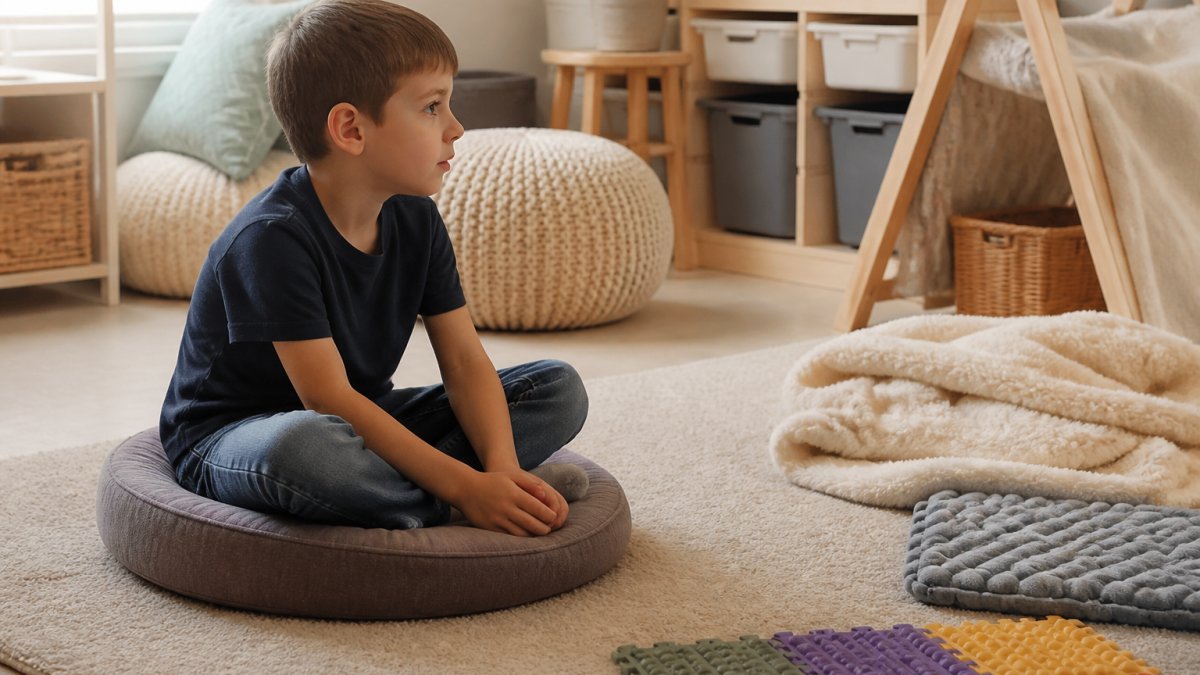
Research shows these symptoms often cluster together. A 2020 study found that 95.8% of its participants with autism spectrum disorder scored as having a probable or definite sensory-processing difference, according to research on sensory processing and attention profiles among children with autism. However, this doesn't mean all sensory difficulties indicate autism.
The challenge is that sensory processing disorder symptoms in children can mimic other conditions. A child who refuses to eat certain foods might have SPD, autism, anxiety, or a combination. Context matters. Duration matters. How the child responds to support matters.
Sensory processing disorder manifests differently depending on whether a child is hypersensitive or under-sensitive to stimuli.
| Sensitivity Type | Common Signs |
|---|---|
| Hypersensitive | Covers ears at normal sounds, refuses certain textures or clothing |
| Hypersensitive | Avoids bright lights, struggles in crowded environments |
| Under-sensitive | Seeks intense sensory experiences like spinning or loud sounds |
| Under-sensitive | Does not respond when name is called, craves movement |
| Under-sensitive | Appears unaware of pain or temperature, seems clumsy |
Sensory Processing Disorder Assessment: How Diagnosis Works
Sensory processing disorder assessment typically involves several steps. A professional will observe the child's responses to different sensory inputs and gather detailed history from parents and teachers.
Assessment usually includes:
- Structured questionnaires about sensory responses
- Observation of how the child reacts to sounds, textures, movement, and lights
- Interview with parents about daily challenges
- Review of school reports and behaviour patterns
- Sometimes formal standardised tests
The challenge with sensory processing disorder assessment is that SPD isn't an official medical diagnosis in the same way autism is. Instead, professionals assess for sensory processing difficulties and determine whether they significantly affect daily functioning.
A proper assessment takes time. It's not a quick screening. Clinicians need to rule out other causes, hearing problems, anxiety, autism, or neurological differences, before confirming SPD as the primary concern. This is why working with someone experienced in sensory assessment matters.
Where Sensory Issues at School Create Real Challenges
School environments present unique sensory demands. Classrooms are loud, bright, and unpredictable. Corridors are crowded. Lunch halls are chaotic. For a child with sensory processing difficulties, school can feel overwhelming before learning even begins.
Sensory issues at school often show up as:
- Difficulty concentrating because of background noise
- Avoidance of PE, assemblies, or lunch
- Meltdowns or shutdowns during transitions
- Struggling to sit still or maintain focus
- Anxiety about specific times or spaces
Teachers often notice sensory difficulties before parents do. A child might manage at home but struggle at school because the sensory load is higher. The noise, the lights, the crowding, the changes in routine, it all compounds.
The problem is that schools don't always recognise sensory difficulties as the root cause. A child who seems anxious or disruptive might actually be overwhelmed by sensory input. Addressing the sensory component can often lead to improvements in behaviour.
[link to internal page: Learn how to manage sensory overload at home and out with practical strategies that work in school settings too.]
Sensory Processing Disorder Support Strategies That Work
Effective sensory processing disorder support strategies focus on creating predictability and managing sensory load. They're not about avoiding all sensory input, that's impossible. They're about helping the nervous system regulate.
Key strategies include:
- Reduce unnecessary sensory clutter: Dim lights, use quiet spaces, remove visual distractions
- Provide predictable routines: Consistency helps the nervous system anticipate what's coming
- Offer sensory breaks: Movement, deep pressure, or quiet time before the child becomes overwhelmed
- Use fidget tools or weighted items: These help some children focus and self-regulate
- Modify clothing and textures: Let the child choose softer fabrics or seam-free options
- Create a calm-down space: A designated area where the child can retreat when overwhelmed
The best sensory processing disorder support strategies are person-centred. What works for one child won't work for another. A child who seeks intense sensory input needs different strategies than one who's overwhelmed by it.
[link to internal page: Explore sensory processing support strategies that actually work with detailed, evidence-based approaches.]
[link to internal page: Learn how to support sensory regulation at home with practical, daily strategies.]
When Sensory Processing Disorder and Autism Overlap
Here's where it gets complicated: sensory processing disorder autism cases show that both often occur together, but they're not the same thing.
A child can have:
- Only autism (with or without sensory differences)
- Only sensory processing disorder
- Both autism and SPD
When both are present, the support needs to address both. Autism interventions focus on social communication, routine, and predictability. Sensory processing disorder interventions focus on regulating the nervous system and managing sensory input. A child with both needs strategies that target both areas.
The overlap creates confusion in diagnosis. Parents sometimes hear "your child has sensory issues" and assume that's autism. Or they get an autism diagnosis and assume the sensory difficulties will resolve once the autism is "managed." Neither is quite right.
What matters is identifying what's actually happening for this specific child. Is the difficulty with social understanding (autism), or is it sensory overwhelm making social situations unbearable (SPD)? Often it's both. Once you know, you can design support that actually fits.
[link to internal page: Explore therapy support for autistic teenagers that fits their complex needs, including sensory regulation.]
Getting the Right Assessment and Personalised Support
Getting the right assessment starts with finding someone who understands both sensory processing disorder and autism well enough to distinguish between them.
A thorough assessment should:
- Take time (not a quick screening)
- Include detailed history from multiple settings
- Observe the child in real situations
- Rule out other causes
- Result in clear, actionable recommendations
The assessment is only useful if it leads to effective support. Generic advice rarely fits. A child needs strategies tailored to their specific sensory profile, their age, their environment, and their strengths.
This is where personalised intervention makes the difference. Rather than a one-size-fits-all approach, support should be co-created with the child, family, and school. It should be realistic to implement and genuinely useful in daily life.
[link to internal page: Explore the services Life-OT offers for assessment and personalised support tailored to your needs.]
Frequently Asked Questions
What is the difference between sensory processing disorder and autism spectrum disorder?
Sensory processing disorder affects how the nervous system processes sensory information, causing over- or under-sensitivity to sounds, textures, light, or movement. Autism spectrum disorder is a neurodevelopmental condition that affects communication, social interaction, and behaviour. While many autistic people experience sensory differences, sensory processing difficulties can occur independently of autism. A 2020 study found that 95.8% of participants with autism had probable or definite sensory-processing differences, yet sensory issues alone do not indicate autism.
Can a child have sensory processing difficulties without being autistic?
Yes. Sensory processing differences occur across the population and are not unique to autism. Children with anxiety, ADHD, dyspraxia, or no neurodevelopmental diagnosis can experience significant sensory sensitivities. The distinction matters because the support strategies, interventions, and underlying causes differ. A proper sensory processing disorder assessment focuses on how the nervous system responds to sensory input, separate from social communication or behavioural traits that define autism.
Can autism and sensory processing disorder occur together?
Yes, they frequently do. Research shows that sensory-processing difficulties are very common in autism, with some studies reporting prevalence in the majority of autistic individuals. When both conditions are present, intervention plans must address both the sensory regulation needs and the social and communication aspects of autism. This is why a multidisciplinary assessment is important, it identifies which challenges stem from sensory processing, which from autism, and which from both.
How should parents choose between sensory integration interventions and autism-specific support?
The answer depends on an accurate diagnosis. If your child has sensory processing difficulties without autism, sensory-focused strategies and occupational therapy targeting sensory regulation are the priority. If autism is present alongside sensory issues, support must address both areas, communication, social skills, and behaviour alongside sensory regulation. Life-OT's multidisciplinary approach combines occupational therapy, physiotherapy, and nutrition to create personalised plans that address the full picture of your child's needs, whether that is sensory processing, autism, or both.
If your child is struggling with sensory overwhelm, social communication, or both, getting clarity matters. Life-OT combines occupational therapy with a multidisciplinary approach to understand what's actually happening and design support that works in real life. We work with families and schools to build practical strategies that rebuild confidence and independence, not just temporary fixes.